Africa Tech Weekly Brief — June 22, 2026
Flutterwave's $3.2B Series E with Ripple, Nigeria's CBN data localisation mandate, South Africa's Yoco acquires Dyner.AI, Kenyan court freezes AI radiology platform, and more from across African tech.
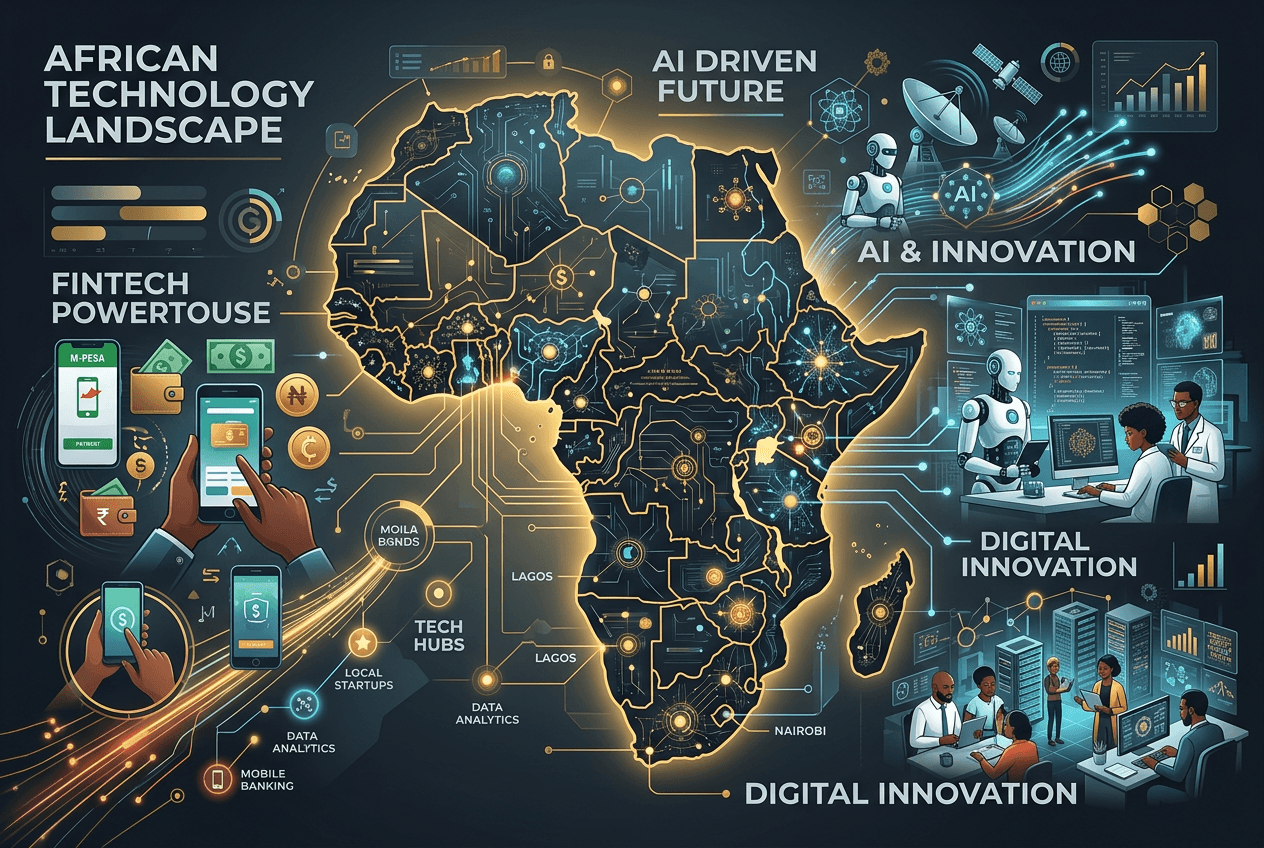
Flutterwave raised a Series E at $3.2 billion — its first major fundraising since February 2022 — with a strategic investment from Ripple, the U.S. blockchain payments company behind the RLUSD stablecoin. Flutterwave plans to integrate RLUSD and XRP Ledger infrastructure into its payment network, betting that stablecoins can solve one of Africa's biggest financial challenges: expensive and slow cross-border payments. CEO Olugbenga Agboola is positioning the company beyond payments toward becoming a financial operating system for African commerce, backed by a microfinance banking licence acquired earlier this year via the Mono acquisition.
Nigeria's Central Bank ordered all payment-related data to be stored and processed within Nigeria by January 2027, a directive that has fintech executives raising concerns about infrastructure readiness. While local data centres from Equinix MDXi, Rack Centre, OADC, and Kasi Cloud exist, few have been stress-tested at the scale of Nigeria's 14-billion-transaction-per-year payments ecosystem. Companies have roughly six months to migrate workloads from global cloud providers into domestic facilities, raising questions about latency, disaster recovery, and migration risk.
South African fintech Yoco acquired Dyner.AI, a local AI startup helping restaurants and independent businesses manage operations, analyse performance, and automate decision-making. Under new CEO Carsten Höltkemeyer (ex-Solaris), Yoco is expanding beyond payments into an end-to-end commerce operating system for its 200,000+ merchants, betting that AI-powered software will be the next growth engine in South Africa's retail technology race.
A Kenyan court ordered a freeze on an AI-powered radiology platform, highlighting growing regulatory scrutiny of AI in healthcare across Africa. The case signals the tensions emerging as AI diagnostic tools enter African health systems faster than the regulatory frameworks designed to oversee them. Meanwhile, Nigeria launched FreeTV on June 17 — a government-backed platform offering over 100 channels with no monthly fee, combining terrestrial, satellite, and internet streaming delivery in a bid to compete with DStv, GOtv, and Netflix.
Get the next Field Desk brief by email
Sourced African tech signals — one email, every Monday.
Payaza Africa launched ShopAza on June 18 in Lagos — a cloud-based eCommerce platform with multi-currency payments across 23 countries spanning Africa, North America, and Europe. Built on Payaza's own payment infrastructure, it taps into Africa's estimated $33 billion social commerce market. It joins a competitive field including Paystack Commerce, Flutterwave Store, Bumpa, and Selar, but differentiates on multi-currency capability and tight integration with Payaza's broader ecosystem.
Cape Town-based Ukiyo launched a platform connecting university students and recent graduates with internships, projects, and early-career opportunities, targeting South Africa's 33.2% youth unemployment rate. Lesaka Technologies extended the deadline for its ~R1.1 billion acquisition of digital bank Bank Zero, awaiting final approval from the South African Reserve Bank. At the Omni Insights Forum in Lagos, Omni released its FMCG Industry Report 2026 revealing that Nigeria's $25 billion FMCG market has only 18% of retailers with formal loan access, arguing that digital payment adoption (now over 75%) creates the transaction data needed for real-time credit assessment.
No major Zambia-specific headlines surfaced in tracked African tech media this week. But several regional developments are relevant: Yoco's AI acquisition could influence how Zambian SME-focused fintechs think about value-added services beyond payments; Nigeria's CBN data localisation push may set a precedent for the Bank of Zambia; and Flutterwave's stablecoin bet matters for Zambia's cross-border remittance corridors within COMESA and SADC.
The week's stories reinforce several themes: AI is moving from hype to deployment across payments, fintech infrastructure, and healthcare with regulation playing catch-up; data sovereignty is accelerating with Nigeria's localisation directive likely to drive data centre investment into underserved markets; fintech is consolidating as the era of single-function payment companies ends; and the education-to-employment gap is attracting a new wave of founders addressing Africa's youth unemployment crisis at scale.
Related opportunity teardowns
AI Credit Scoring for Informal Economy Workers
Map three lenders with default data and one mobile-money partner with consented transaction access.
AI-Assisted Medical Diagnostics for Rural Clinics
Choose one diagnostic workflow and confirm the data, regulator, and clinical owner before prototyping.
Get the next Field Desk brief by email
Sourced African tech signals — one email, every Monday.
This brief reflects AfriAI Field Desk analysis and opinion, aggregated from third-party reporting. It is informational only and not financial, investment, or professional advice. Read the full disclaimer.